Kashmir Great Lakes

India's Most Beautiful Trek Through
7 Great Lakes

 
The Kashmir Great Lakes Trek is one of the most scenic multi-day treks in the Indian Himalayas. Over the course of about a week, its trail connects you with a series of seven high-altitude alpine lakes of Kashmir.
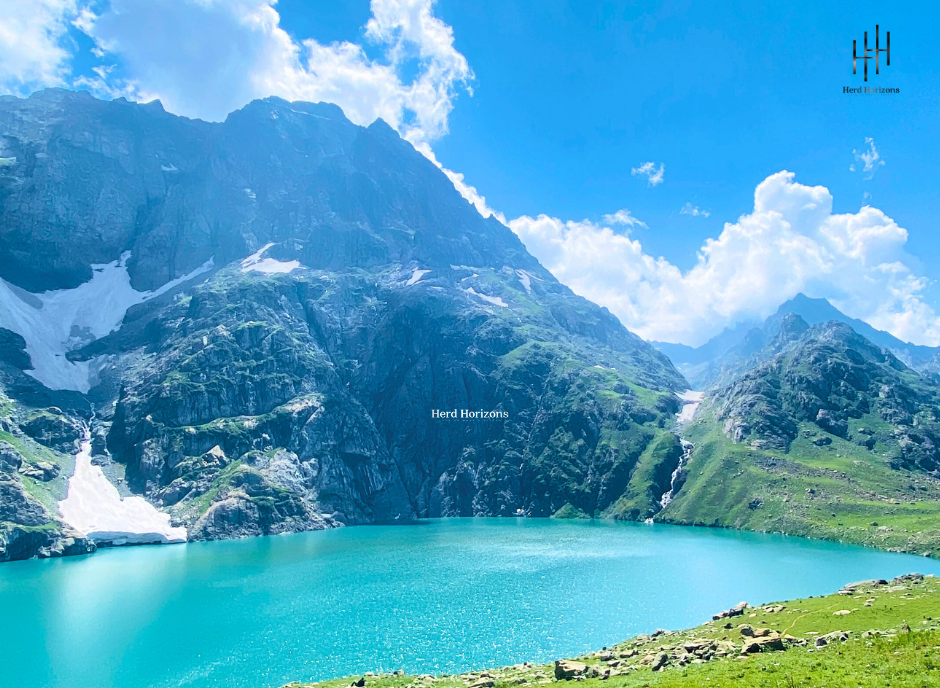
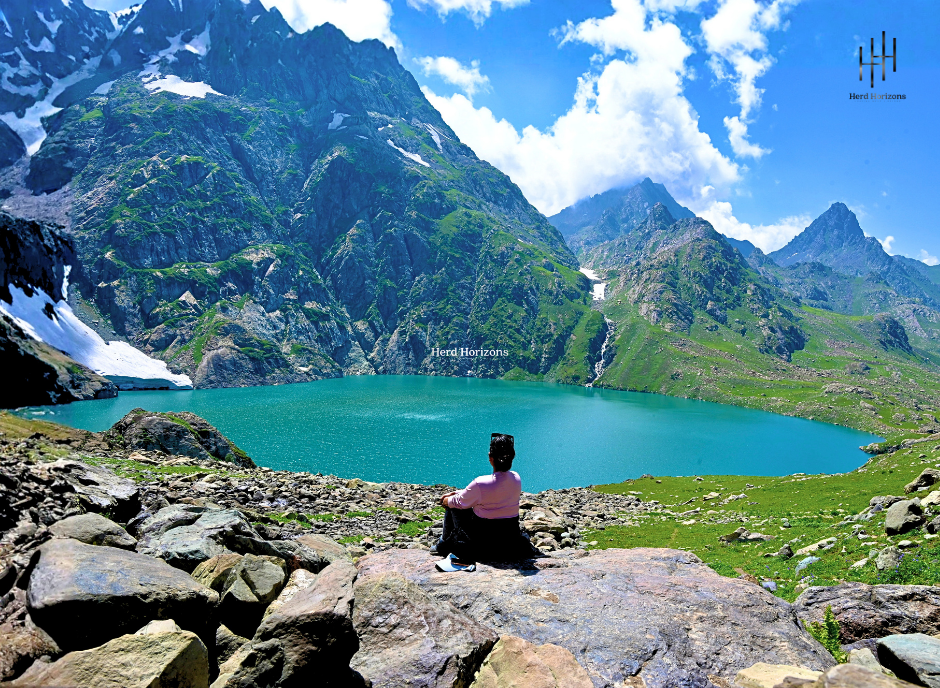
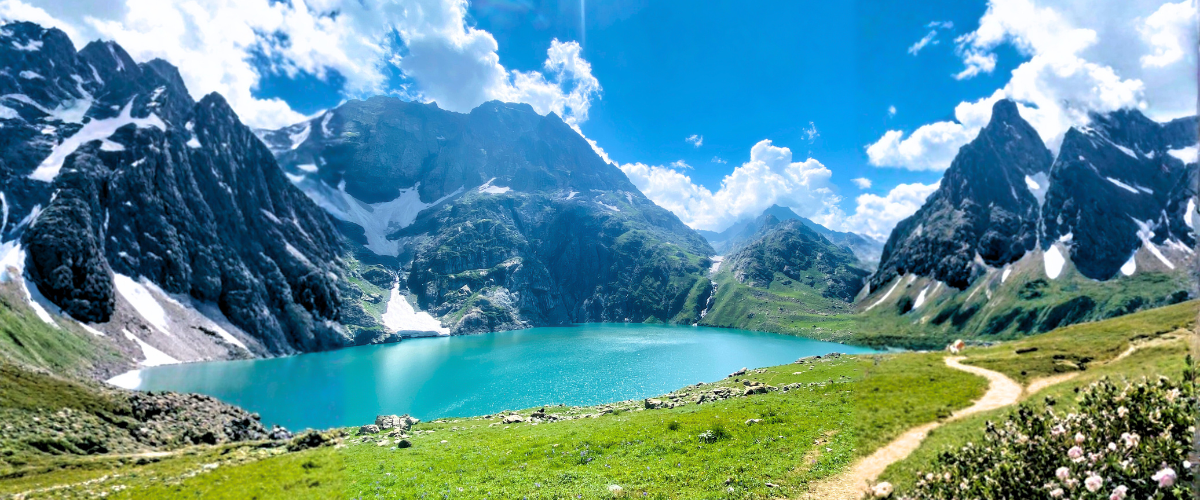
The trek begins near Sonamarg and gradually climbs through pine forests, rolling meadows, and high mountain passes. Along the way, you come across breathtaking lakes such as Vishansar Lake and Gangbal Lake, each surrounded by open valleys and snow-covered peaks.
 
With landscapes changing almost every day, this trek offers you a rare chance to experience the quiet beauty and scale of the Himalayas on foot.
Important Notice - 2026 season

Due to the sensitive conditions in Jammu & Kashmir, permissions for the Kashmir Great Lakes (KGL) Trek are not yet confirmed and may be subject to government advisories. You may book your slot in advance, and dates can be changed if required. If a “no permission” notice is issued on or before May 30, 2026, we will provide a full refund of your trek fee. If the trek operates as scheduled after this date, our standard cancellation policy will apply.

We recommend booking refundable flights, planning travel after April for better clarity, and keeping 2-3 buffer days. Trekkers may consider flying to Delhi for greater flexibility with alternate Himalayan treks if needed.

Available Dates

July 2026

10 July 2026 – 15 available   Book Now

12 July 2026 – 12 available  Book Now

15 July 2026 – 15 available   Book Now

20 July 2026 – 12 available    Book Now

21 July 2026 – 13 available    Book Now

25 July 2026 – 15 available    Book Now

27 July 2026 – 11 available    Book Now

5 August 2026 – 15 available   Book Now

9 August 2026 – 15 available   Book Now

12 August 2026 – 12 available  Book Now

15 August 2026 – 15 available   Book Now

17 August 2026 – 15 available   Book Now

20 August 2026 – 12 available    Book Now

21 August 2026 – 13 available    Book Now

25 August 2026 – 15 available    Book Now

27 August 2026 – 11 available    Book Now

2 September 2026 – 15 available   Book Now

5 September 2026 – 15 available   Book Now

10 September 2026 – 12 available  Book Now

12 September 2026 – 15 available   Book Now

15 September 2026 – 15 available   Book Now

19 September 2026 – 12 available    Book Now

21 September 2026 – 13 available    Book Now

24 September 2026 – 15 available    Book Now

Kashmir Great Lakes
Booking

*Early Bird Offer

Rs. 15,499/-

Per Person

or Have questions about the Trek?

Chat with our Team for batch dates, itinerary, pricing, and quick booking support.

Chat with Us
Overview:

Region: Kashmir Himalayas, Jammu & Kashmir
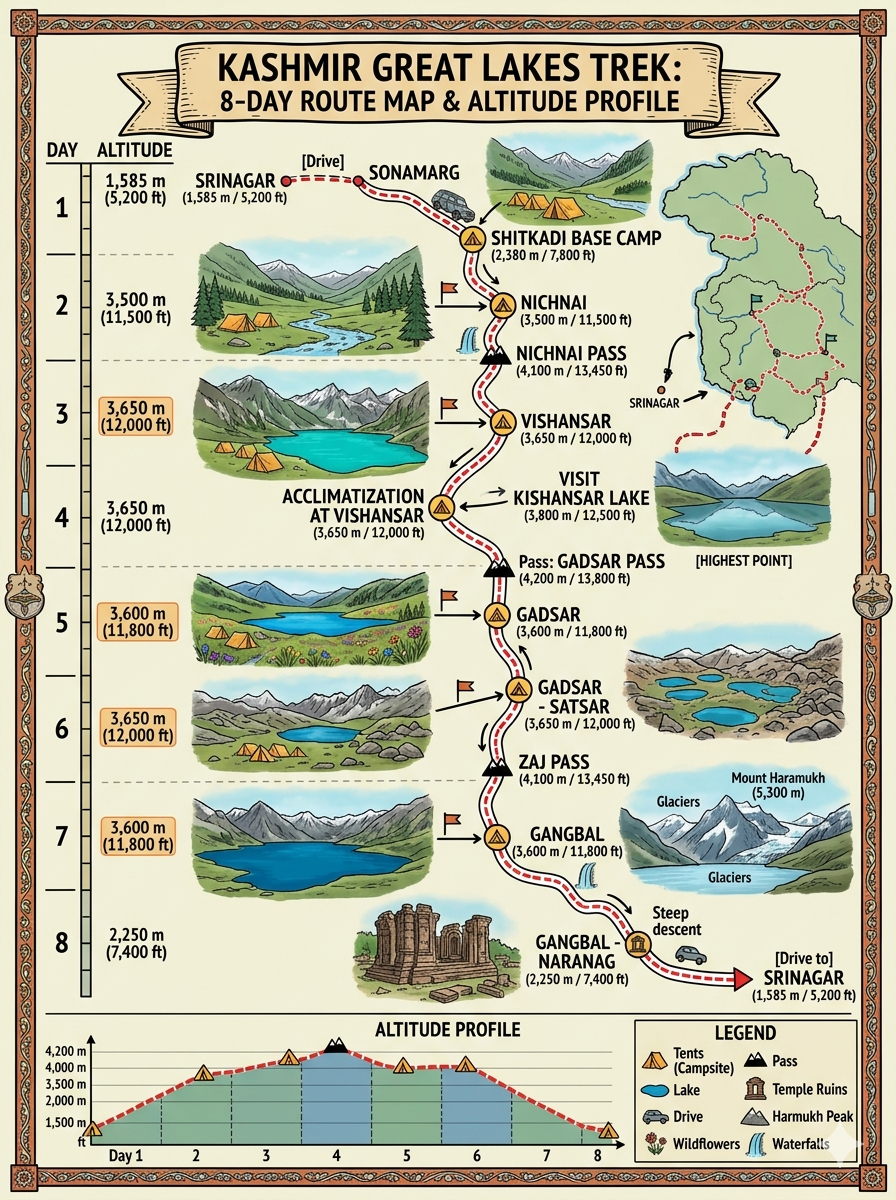
Duration: 8 Days / 7 Nights
Trek Distance: ~70–75 km
Maximum Altitude: ~13,800 ft (Gadsar Pass)
Difficulty Level: Moderate
Starting Point: Sonamarg
Ending Point: Naranag
Best Time to Visit: July to September

Highlights:

✔ A New Lake Almost Every Day
Unlike most Himalayan treks, this route reveals a chain of alpine lakes across multiple valleys. Lakes like Vishansar Lake and Gangbal Lake appear in completely different landscapes.

✔ Walking Through Nomadic Shepherd Routes
The trail passes through seasonal grazing lands used by Bakarwal and Gujjar shepherds, offering glimpses of traditional Himalayan pastoral life.

✔ Dramatic High Pass Crossings
Crossing Gadsar Pass reveals sudden panoramic views of lakes and valleys hidden on the other side.

✔ Color-Changing Lakes
Many lakes change color during the day depending on sunlight, clouds, and depth, shifting from deep blue to turquoise.

✔ Campsites Beside Remote Lakes
Several camps are set right next to the lakes or water streams, something very few treks in India offer consistently.

✔ A Traverse Trek (Not a Return Route)
The trek starts near Sonamarg and ends at Naranag, meaning you constantly move through new terrain instead of retracing the same trail.

KGL Trek - 8 Days Itinerary

This is how each day looks like in your 8 Days trek journey:

Day 1: Srinagar to Sonamarg to Shitkadi Base Camp

Your journey begins with a beautiful drive from Srinagar to Sonamarg, a stunning valley known for its lush meadows and alpine beauty. From Sonamarg, continue a little further to Shitkadi, the base camp for the Kashmir Great Lakes Trek. The drive takes about three hours and treats you to views of flowing rivers, dense forests, and towering Himalayan peaks like Kolahoi and Machoi.

Once you reach the campsite, settle in and soak in the wide open grasslands around you. Spend the day relaxing, breathing in the fresh mountain air, and getting yourself ready for the trek. In the evening, meet your trek leader for a short briefing, followed by dinner.

Rest early to help your body adjust to the altitude and prepare for the adventure ahead.

Altitude: ~7,800 ft
Distance: ~90 km drive
Duration: 3 to 4 hours

Highlights:
• Scenic drive along the Sindh River
• Views of Kolahoi and Machoi peaks
• Peaceful campsite in alpine meadows


The trek begins with a gentle start from Sonamarg, gradually making its way toward Nichnai. The trail follows a clear path alongside the Sindh River before slowly climbing through thick forests of maple and pine. The shade from the trees and the sound of the river make for a refreshing start.

As you gain height, the forest begins to thin out and opens into wide green meadows with beautiful views of the valley below. The trail has a mix of gradual climbs and a few descents, keeping the walk interesting. You may also cross small streams along the way, adding a bit of fun to the journey.

Beyond the tree line, the path enters a quiet alpine valley where the Nichnai campsite is set beside a flowing stream. Surrounded by tall mountains and peaceful landscapes, it is a perfect first campsite in the high Himalayas.

Altitude: ~11,500 ft
Distance: ~9 km
Duration: 5 to 6 hours

Highlights:
• Walk through maple and pine forests
• Expansive meadows with valley views
• Scenic campsite by a mountain stream

Start your day early as you head toward Nichnai Pass, the highest point you have reached so far on the trek. The climb is steady and a bit challenging, but the views of the surrounding peaks and valleys make every step worthwhile.

From the top of the pass, the landscape changes dramatically as you descend into a wide meadow that stretches toward Vishansar. The trail shifts from rocky terrain to soft grasslands, with small streams flowing across the valley, creating a stunning alpine setting.

As you walk further, the beautiful Vishansar Lake comes into view, its deep blue waters reflecting the mountains around it. The campsite is set near the lake, offering a peaceful and unforgettable setting. If time and energy allow, you can also visit Kishansar Lake, located a little higher and equally captivating.

Altitude: ~12,000 ft
Distance: ~12 km
Duration: 6 to 7 hours

Highlights:
• Crossing the scenic Nichnai Pass
• First views of Vishansar Lake
• Optional visit to Kishansar Lake

This day is kept for acclimatization, giving your body time to adjust to the higher altitude. You can take a short walk to Kishansar Lake, located about half a kilometer away. The gentle uphill trail leads you to a calm alpine lake surrounded by open meadows and rugged peaks. The clear water reflecting the mountains makes it a great place to relax and take photos.

You can also spend time around the campsite, take short walks, or simply enjoy the peaceful surroundings. This rest day plays an important role in preparing you for the higher passes ahead. Return to camp by evening, have a warm meal, and rest well.

Altitude: ~12,000 ft
Distance: ~1 to 2 km (exploration)
Duration: 2 to 3 hours

Highlights:
• Visit to Kishansar Lake
• Relaxed day for acclimatization
• Peaceful alpine surroundings

Today is one of the most challenging yet rewarding days as you cross Gadsar Pass, the highest point of the trek. The trail climbs steadily along mountain ridges, offering wide views of Vishansar and Kishansar lakes below. Snow patches are often seen along the way, even during summer.

From the top of the pass, take in breathtaking views of the surrounding Himalayan ranges. The descent leads into the beautiful Gadsar valley, dotted with small alpine lakes and grazing pastures. You may pass an army checkpoint along the route.

The day ends at the serene Gadsar campsite near the lake, one of the most scenic camping spots on the trek.

Altitude: ~12,000 ft (Pass: ~13,750 ft)
Distance: ~14 km
Duration: 7 to 8 hours

Highlights:
• Crossing the highest point at Gadsar Pass
• Panoramic views of multiple alpine lakes
• Stunning campsite near Gadsar Lake

✔ Relaxing end of your trekking journey at Govindghat


After breakfast, begin your trek toward the Satsar valley. The trail gradually descends through wide meadows and follows a gentle valley route, making it easier compared to the previous day.

Along the way, you will pass small lakes and streams, with the landscape opening into vast grasslands surrounded by rugged mountains. You may cross an army checkpoint, so keep your ID ready.

As you reach Satsar, the area feels more remote and quiet. The name means seven lakes, and depending on the season, a few of them can be seen spread across the valley. Camp here and enjoy the calm beauty of this high altitude basin.

Altitude: ~12,000 ft
Distance: ~12 km
Duration: 6 to 7 hours

Highlights:
• Easy walk through alpine meadows
• Multiple small lakes along the route
• Quiet and secluded campsite

Today is another memorable day as you cross Zaj Pass on your way to Gangbal. The climb is steady and moderately challenging, but the views from the top make it worthwhile.

From the pass, you get your first view of Mount Harmukh and the twin lakes of Gangbal and Nundkol below. The descent can be steep in sections, leading into a beautiful valley filled with meadows and streams.

As you get closer, the lakes reveal their full beauty against the dramatic mountain backdrop. Gangbal, the larger lake, is considered sacred, while Nundkol sits quietly beside it. Camp near the lakes and take in one of the most iconic views of the trek.

Altitude: ~11,500 ft (Pass: ~13,000 ft)
Distance: ~10 km
Duration: 6 to 7 hours

Highlights:
• Crossing Zaj Pass
• Views of Mount Harmukh
• Camping near Gangbal and Nundkol lakes

On the final day, begin your descent from Gangbal toward Naranag. The trail starts through open meadows and then enters dense pine forests, offering a refreshing change in scenery.

The descent is long but gradual, taking you from high altitude terrain down to lower elevations. As you near Naranag, you will come across ancient temple ruins that reflect the rich history of the region.

Once you reach Naranag, the trek comes to an end. From here, drive back to Srinagar, marking the conclusion of a memorable journey through the Kashmir Great Lakes.

Altitude: ~7,400 ft
Distance: ~11 km trek plus drive to Srinagar
Duration: 6 to 7 hours trek plus 3 to 4 hours drive

Highlights:
• Scenic descent through forests and meadows
• Visit to ancient Naranag temple ruins
• Completion of the KGL trek journey

How to Reach Manali (Base for Hampta Pass Trek)

Srinagar is the starting point for the Kashmir Great Lakes Trek and is well connected by air and road from major cities in India.

🛣️ By Road

Srinagar is accessible via well maintained highways from Jammu and nearby regions. Regular buses and taxis are available.

Delhi to Srinagar: ~800 km (18 to 20 hours)
Jammu to Srinagar: ~270 km (7 to 9 hours)

The Jammu to Srinagar route offers scenic mountain views but can be affected by weather conditions.

🛫 By Air

The nearest airport is Srinagar International Airport, located about 12 km from the city center.

Regular flights operate from Delhi, Mumbai, and other major cities. From the airport, taxis are easily available to reach your hotel or pickup point.

🚉 By Train

The nearest major railway station is:

Jammu Tawi Railway Station – ~270 km from Srinagar

From Jammu, you can continue your journey by road via taxi or bus.

⭐️ Arrival Recommendation: Trekkers are advised to reach Srinagar at least a day before the trek begins to avoid any last minute delays and to ensure a smooth start to the journey.

Packing the right gear is important for a safe and comfortable trekking experience. The weather in the Himalayas can change quickly, so it’s best to carry essential clothing and equipment suitable for cold temperatures and long walking hours.

👕 Clothing

✔ Warm jacket (down or padded jacket)
✔ Fleece or sweater for layering
✔ 2–3 quick-dry trekking t-shirts
✔ Trekking pants (avoid jeans)
✔ Thermal innerwear (top & bottom)
✔ Waterproof jacket or poncho
✔ Woollen cap and sun cap
✔ Gloves (warm or fleece)

🥾 Footwear

✔ Good quality trekking shoes with grip
✔ 2–3 pairs of trekking socks
✔ Comfortable slippers for campsite

🎒 Personal Essentials

✔ Small backpack (30–40L)
✔ Water bottles (at least 2 litres)
✔ Sunglasses with UV protection
✔ Sunscreen and lip balm
✔ Personal toiletries and towel
✔ Headlamp or torch

🔋 Accessories

✔ Trekking pole (optional but helpful)
✔ Power bank for charging devices
✔ Personal medicines and basic first aid
✔ Snacks or energy bars

⭐️ Important Tip: Pack light but carry all essentials. Proper clothing layers and good trekking shoes can make your trek more comfortable and enjoyable.

1. How fit do I need to be for the Kashmir Great Lakes Trek?

The trek requires a moderate level of fitness. Participants should be comfortable walking for 5–7 hours a day on mountain terrain. Regular walking, jogging, or cardio training for a few weeks before the trek is recommended.

Before joining the trek, we recommend checking your Body Mass Index (BMI) and maintaining a healthy fitness routine.

You can use the BMI calculator provided below on this page to quickly check if you fall within the recommended range for trekking.

A BMI between 18.5 and 27, along with good stamina, is generally considered suitable for this trek.

Accommodation during the trek is provided in twin/triple sharing tents at designated campsites. Tents, sleeping bags, and sleeping mats are arranged by the trek team to ensure a comfortable camping experience.

Mobile connectivity is limited during the trek. Most trekking campsites have little or no signal.

Weather in the mountains can change quickly. In case of unsafe conditions, the trek leader may modify the itinerary for safety. 

Yes, but it requires a moderate level go fitness, provided participants workout few weeks before trek and follow the trek leader’s guidance.

Nutritious and freshly prepared meals are provided during the trek, including breakfast, lunch, evening snacks, and dinner. The food is mostly vegetarian and designed to provide the energy required for trekking at high altitude.

During the trek, portable or temporary toilet tents are usually set up at campsites. These are basic but maintained for hygiene and privacy. Trekkers are expected to follow eco-friendly practices while using these facilities.

Fitness & BMI Requirement

Trekking in the Himalayas requires a reasonable level of physical fitness and endurance. Trails can involve long walking hours, gradual climbs, and high altitude conditions. Preparing your body in advance will help you enjoy the trek safely and comfortably.

Before joining the trek, we recommend checking your Body Mass Index (BMI) and maintaining a healthy fitness routine.

What is BMI?

BMI (Body Mass Index) is a simple measure that helps determine whether your body weight is within a healthy range for your height.

Recommended BMI Range

For most Himalayan treks, a BMI between 18.5 and 27 is generally considered suitable, along with good stamina and overall fitness.

BMI Calculator

BMI Calculator
Why Choose Hampta Pass Trek?

The Kashmir Great Lakes Trek is often called one of the most beautiful treks in India, offering an unmatched blend of alpine lakes, mountain passes, and ever-changing landscapes.

Top Reasons to Choose This Trek:
• Visit multiple stunning alpine lakes like Vishansar, Kishansar, Gadsar, and Gangbal
• Experience diverse landscapes from forests and meadows to high mountain passes
• Cross scenic passes like Nichnai, Gadsar, and Zaj with panoramic views
• Camp in some of the most picturesque locations in the Himalayas
• Ideal for trekkers looking for a complete and visually rewarding Himalayan experience

Why Choose Herd Horizons?

Experienced Trek Leaders

Our team understands the mountains and prioritizes your safety throughout the trek.

Well-Planned Itineraries

Comfortable campsites, balanced trekking days, and proper acclimatization.

Small Trek Groups

So everyone gets personal attention and a better trekking experience

Quality Equipment & Support

High-quality tents, nutritious meals, and reliable logistics on the trail.

Friendly & Supportive Team

From booking to the last day of the trek, our team is there to help you at every step.

Transparent Pricing

No hidden costs. What you see in the inclusions is exactly what you get.

Responsible Trekking: Leave No Trace

The Himalayas are fragile and beautiful, and every trekker shares the responsibility of protecting them. At Herd Horizons, we follow Leave No Trace principles to ensure that our treks have minimal impact on the environment.

Carry Back Your Waste: All non-biodegradable waste is packed and brought back to proper disposal points.
Avoid Single-Use Plastic: Trekkers are encouraged to carry reusable water bottles and minimize plastic use.
Respect Nature & Wildlife: Do not disturb wildlife, pick plants, or damage natural surroundings.
Leave Campsites Clean: We ensure that campsites are left exactly as we found them, or cleaner.
Respect Local Communities: We promote responsible travel by respecting local culture, traditions, and livelihoods.

Talk to our team for trek details

Chat with our Team for batch dates, itinerary, pricing, and quick booking support,

or need help planning your trek, our team is happy to assist you.

Chat with Us

Reach Out
To Us

+91 82670 81553, +91 83830 42386